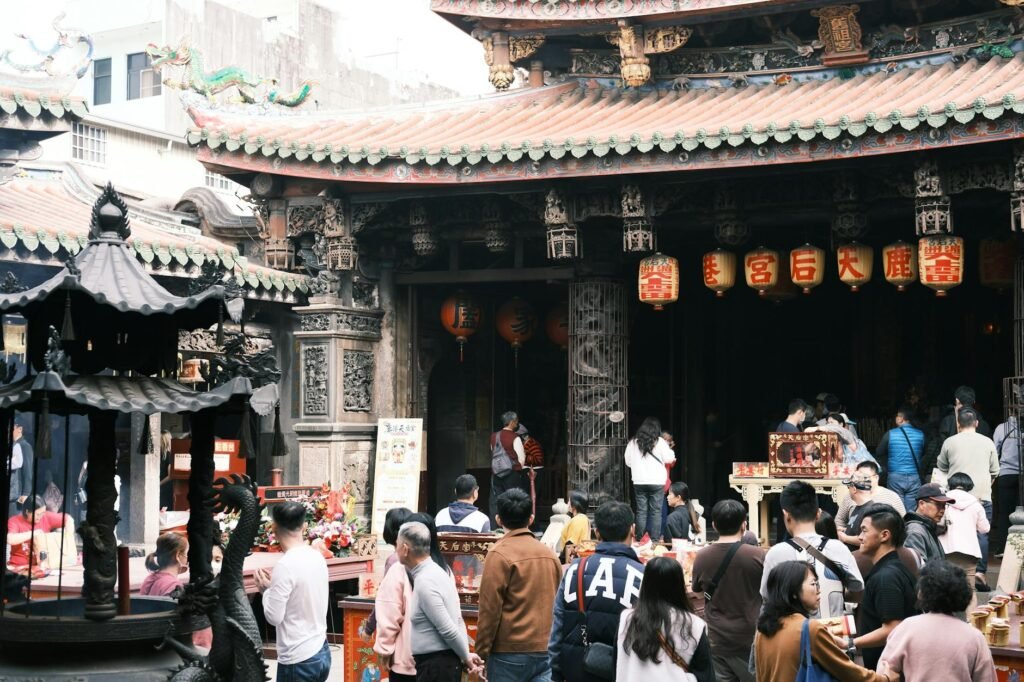
Growing up in Taiwan, temples were a part of my life in ways that felt natural but profound. My family would follow our neighbors and relatives to temple festivals, and I remember the bustle, the energy, and the joy of those days vividly. It wasn’t just about religion; it was about community, shared memories, and a sense of participation in something larger than ourselves. During festivals, I was often part of the program—helping out, watching performances, and joining the crowd. One of my favorite memories was eating lunch together in a temple’s dinning room where always serves vegetarian cuisine with my family. It wasn’t a regular meal; it was a symbolic sharing of blessings, a communal act that tied us together. I remember crossing the bridge on the first days of the Lunar New Year, feeling like completing this ritual would secure blessings for the year ahead. As I grew older, my perspective changed. I realized that the true purpose of temples might not be about whether rituals work or whether idols can magically bless us. Blessings are not something that magically descend. They are the hope, support, and love we generate together as a community. Temples are spaces that connect people, that create community. And that remind me of the power we have to move forward with hope is ourselves, through our actions, prayers, and care for others, that can foster blessings—not something outside of us. Even so, I still believe temples are deeply meaningful. Walking among the dragon pillars, intricate carvings, and colorful lanterns, I am reminded of the skill and dedication of generations of craftsmen. Their knowledge, passed down meticulously, shows us the marvels of human creativity and devotion. Temples also preserve history in stone, wood, and paint, telling stories that reach across centuries. Temples also feed memories, body, and soul. The meals we shared during festivals, the smells of incense, the warmth of family sitting together—they all created a foundation of comfort and security. These experiences nurtured me and everyone around me, connecting generations and tying us to our cultural roots. In Taiwan, temples are more than religious sites; they are the heart of culture. They are spaces that teach, inspire, and remind us of the beauty of community, the value of craftsmanship, and the power of hope. They are where history, art, and human connection meet, and where our childhood memories and life lessons intertwine. So next time you visit a Taiwanese temple, take a moment to look beyond the rituals. Observe the carvings, watch the community, taste the food, and listen to the stories. You’ll see how temples continue to shape life, generation after generation. Phrase of the Week代代相傳(dài dài xiāng chuán)Meaning: passed down from generation to generation Sample Sentences:
– Táiwān de miàoyǔ wénhuà dài dài xiāng chuán, bǎocúnle xǔduō chuántǒng xísú. – Taiwan’s temple culture has been passed down from generation to generation, preserving many traditional customs.
– Miào lǐ de diāokè hé jiànzhù jìyì dài dài xiāng chuán, zhǎnshìle gōngjiàng de zhìhuì. – The carving and architectural skills in the temple have been passed down from generation to generation, showcasing the wisdom of craftsmen.
– Měi nián de miàohuì huódòng, dōu shì dài dài xiāng chuán de zhèngmíng. – The annual temple festivals are proof that the it has been passed down from generation to generation.
– Ràng zhèxiē měidé dài dài xiāng chuán. – These virtues are passed down from generation to generation. |