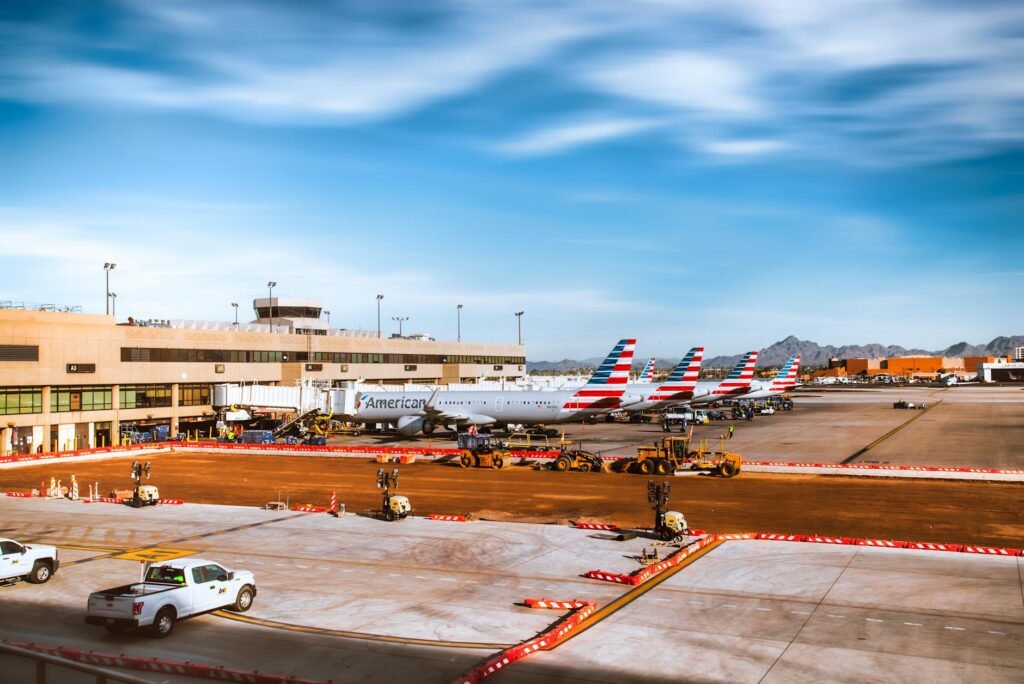
For most of my life, I believed opportunity had a very specific look. It was coastal. It was busy. It was familiar. Opportunity looked like California, New York, Seattle—places we’ve heard about over and over again. Places that felt validated by popularity. If many people wanted to go there, then surely that’s where growth must be. Phoenix never fit that picture. In fact, if you had asked me a few years ago what came to mind when I heard “Phoenix,” my answer probably would have been vague at best: hot weather, desert, somewhere far inland. Not a place I’d naturally associate with ambition, change, or a future worth imagining. And yet, here we are. Phoenix is no longer just a dot on the map—it’s becoming a symbol of something much bigger: how opportunity is quietly shifting away from the places we’ve been conditioned to chase, and toward places we once overlooked. This shift forces us to ask an uncomfortable question: Are we brave enough to follow opportunity when it doesn’t look familiar? Why We Resist the Unfamiliar Most of us don’t like admitting it, but we are deeply attached to our comfort zones. Comfort zones aren’t just physical places—they’re emotional systems. Language we’re fluent in. Food we crave. Weather we know how to dress for. A rhythm of life we’ve learned to navigate without thinking too hard. For people in Taiwan, comfort often points outward in very specific directions. When we think about going abroad, certain cities feel “safe” because they’ve already been chosen by others. California has sunshine. New York has energy and opportunity. Seattle has tech and rain that somehow still feels manageable. These places don’t challenge our identity too much. We know the rules. We know the stories. We know how success there is supposed to look. Phoenix doesn’t offer that reassurance. It’s inland. It’s dry. It’s slow. It doesn’t try to impress you. And because of that, many of us instinctively label it as “less.” Less exciting. Less convenient. Less promising. But what if “less familiar” doesn’t mean “less opportunity”? Phoenix as a Metaphor for Moving Inland Phoenix is uncomfortable in very obvious ways. The heat isn’t playful—it’s intense. Over 40 degrees in the summer, the kind of heat that forces you to plan your day differently. The city isn’t crowded. Streets are wide. Life moves at a pace that feels almost suspiciously slow to someone raised in Taiwan’s dense, fast-moving cities. At first glance, it can feel empty. But that emptiness is exactly where the metaphor begins. We often confuse quiet with stagnation. We mistake space for lack of ambition. We assume that if a place isn’t buzzing, it must not be growing. In reality, Phoenix is growing precisely because it offers what overcrowded cities no longer can: room to expand, room to think, room to build. Moving inland—geographically or metaphorically—means stepping away from constant validation. There’s no crowd cheering you on. You have to define success for yourself. And that’s terrifying. When Opportunity Changes Direction TSMC’s decision to invest in Phoenix wasn’t just a business move—it was a signal. It told the world that opportunity is no longer confined to traditional centers. That innovation doesn’t need an ocean view. That growth can happen in places defined by sun, sand, and silence. Once TSMC arrived, the ripple effects were immediate. Engineers moved. Families followed. Communities formed. Taiwanese restaurants appeared. Bubble tea shops opened. Lunar New Year celebrations and Mid-Autumn Festival barbecues began showing up in a city that many Taiwanese people had never even considered visiting. And then came the direct flight. Suddenly, Phoenix wasn’t “far” anymore. What fascinates me most isn’t the speed of this transformation—it’s how naturally it happened. When conditions align, things don’t need to be forced. Growth Requires New Rhythms Living—or even imagining life—in a place like Phoenix requires internal adjustment. You can’t rely on density for stimulation. You can’t hide in crowds. You have to create your own routines, your own social circles, your own sense of belonging. That process changes people. I’ve noticed that when Taiwanese families settle in Phoenix, they don’t just transplant their old lives—they redesign them. Weekends look different. Community matters more. Small gatherings replace big social scenes. Children grow up with more space, more time. And with that comes a subtle but powerful shift in mindset. In Taiwan, we’re used to measuring progress by how fast things move. How busy we are. How full our schedules look. But in places like Phoenix, growth shows up quietly—in stability, in intentional choices, in long-term planning. The Direct Flight Is More Than a Route When the direct flight between Taipei and Phoenix was announced, many people saw it as a practical convenience. Fewer layovers. Less travel time. More efficient business trips. But emotionally, it represents something much deeper. A direct flight gives people permission. Permission to consider Phoenix seriously. Permission to imagine a life there. Permission to try without feeling completely cut off from home. Choosing Growth Over Comfort Phoenix teaches us an important lesson: opportunity doesn’t always shine—it often waits. It waits for people willing to trade familiarity for possibility. It waits for those brave enough to redefine success on their own terms. It waits inland. Stepping out of comfort zones isn’t about rejecting what we know—it’s about expanding who we can become. So the next time opportunity doesn’t look like what you imagined—when it feels too quiet, too slow, too unfamiliar—pause before you turn away. Because sometimes, that’s exactly where growth begins. Latest EpisodeIn this week’s episode, C#50 一條航線的力量:台北直飛鳳凰城,會帶來哪些改變?(Yī tiáo hángxiàn de lìliàng:Táiběi zhífēi Fènghuángchéng,huì dàilái nǎxiē gǎibiàn). I want to talk about a city that many people in Taiwan used to overlook—Phoenix. A few years ago, I probably wouldn’t have put it on my travel list either. It felt far, unfamiliar, and honestly… too hot. But everything started to change when TSMC moved in. What followed wasn’t just business—it was people, families, food, festivals, and eventually, a direct flight that connected Taiwan and Phoenix in a way we’ve never seen before. In this episode, I’ll share how Phoenix is slowly turning into a “Little Taipei,” why that direct flight matters more than we think, and how a quiet desert city is becoming a new bridge between two cultures. Listen to the latest Podcast Phrase of the Week落地生根 (luò dì shēng gēn)Meaning: To settle down and put down roots. Sample Sentences:
– Xǔduō gōngchéngshī yǐjīng zài Fènghuángchéng luò dì shēng gēn. – Manyengineers have already put down roots in Phoenix.
– Cóng Zhōngwén xuéxiào dào shèqún huódòng, shēnghuó zhēn de kāishǐ luò dì shēng gēn. – From Chinese schools to community events, life is truly settling in.
– Wénhuà huì gēnzhe rén yìqǐ luò dì shēng gēn. – Culture takes root wherever people go.
– Zhèlǐ bù zài zhǐ shì gōngzuò dìdiǎn, ér shì kěyǐ luò dì shēng gēn de dìfāng. – This is no longer just a workplace—it’s a place to settle down. |