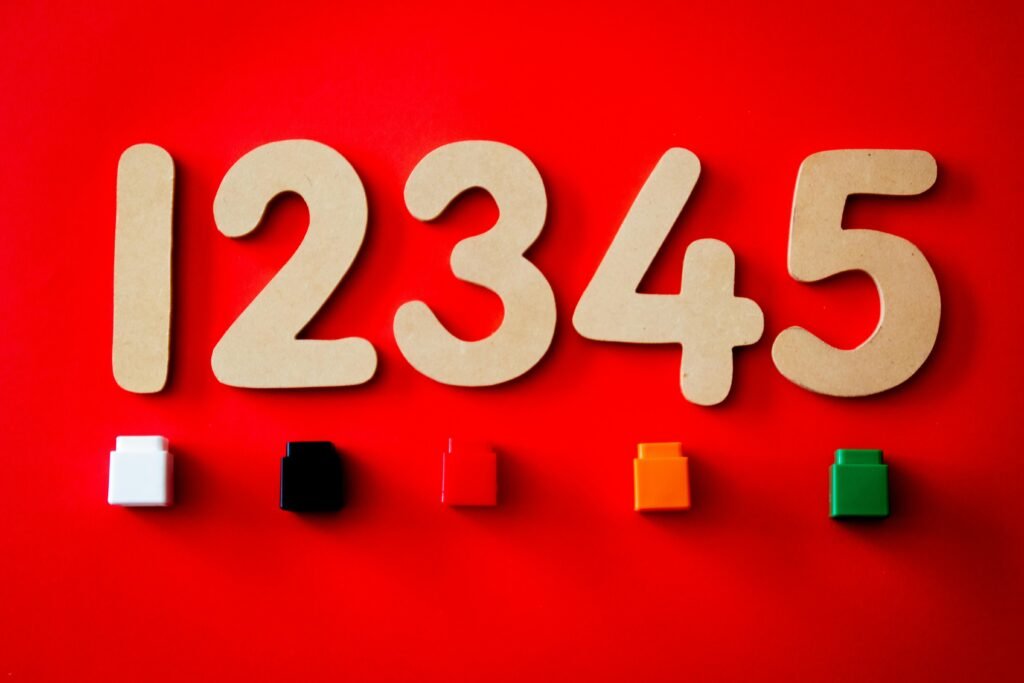
Numbers are mostly used for calculation. But in Taiwan, particularly in Chinese culture, it’s beyond the figure itself. They are meaningful in some ways.
Numbers in Chinese Expressions
From this week’s episode, I explored how numbers in Taiwan go far beyond simple counting. From the lucky power of 8 to the spooky chill of 4, we saw how numbers reflect beliefs, traditions, and even emotions. But did you know that these meaningful numbers don’t just live in superstition or license plates—they also appear in how we speak every day?
That’s right—Chinese is full of idioms, or 成語 (chéngyǔ), that use numbers to express deep ideas, life lessons, or shared experiences. These idioms are short, vivid phrases passed down through generations. And when numbers show up in them, they do more than just sound good—they help us tell stories, share values, and connect with others on a deeper level.
I’d love to share 5 beautiful idioms with you, each using the numbers 1 to 5. Whether you’re learning Mandarin, curious about cultural meaning, or just love a clever phrase, these idioms are full of everyday wisdom. Let’s take a closer look!
Why Numbered Idioms Matter?
In Chinese, numbers aren’t just symbolic—they’re also rhythmic, memorable, and packed with meaning.
Idioms with numbers are easier to remember because they follow a pattern. More importantly, each number carries its own cultural flavor:
- 1 一 (yī) often represents a single truth or complex idea, hinting that some things can’t be easily summed up in just one phrase — as in 一言難盡 (yī yán nán jìn).
- 2 二 (èr) reflects decisiveness and action without hesitation, especially when there’s no need for a second thought — like 二話不說 (èr huà bù shuō).
- 3 三 (sān) suggests internal conflict or divided thoughts, as seen in 三心二意 (sān xīn èr yì), where the mind wavers between multiple choices.
- 4 四 (sì) can symbolize the whole world or broad horizons, as in 四海為家 (sì hǎi wéi jiā), meaning to feel at home anywhere.
- 5 五 (wǔ) evokes richness in variety, especially in visual form — just like 五顏六色 (wǔ yán liù sè), which paints a picture of vibrant diversity.
Just like the fun combos we explored before—like 520 for “我愛你 (wǒ ài nǐ)”. In Chinese, it means “I love you” or 444 ( sì sì sì) for 3 times death. It’s easy to imagine how horrible it is if someone is doomed to have 3 times chance of dying—these idioms use numbers to capture feelings, values, and life truths in just a few characters.
Five Idioms
Let’s dive into these five idioms—from one to five. Each are starting from the number and we’ll see how they come alive in daily conversation.
- 一言難盡 (yī yán nán jìn)
It means it’s hard to explain in one sentence.
This idiom is used when something is too complex, emotional, or layered to describe briefly. It reflects situations where a simple explanation just doesn’t do justice—like a bittersweet memory, a long story, or complicated feelings. For instance, when someone asks, “What happened between you two?” and the answer isn’t simple, you might say 一言難盡 (yī yán nán jìn).
- 二話不說 (èr huà bù shuō)
It means without saying a second word / without hesitation.
This idiom is used when someone takes action immediately and decisively, without arguing or wasting time. It reflects directness, loyalty, or urgency—especially in moments when actions speak louder than words. For example, when a friend is in trouble and you rush to help without asking questions, people might say you did it 二話不說 (èr huà bù shuō).
- 三心二意 (sān xīn èr yì)
It means being indecisive or having mixed feelings.
This idiom describes a person who’s distracted, not fully committed, or unsure about what to do. It’s often used in situations involving relationships, work, or big decisions—where someone can’t make up their mind. For instance, if someone keeps changing their mind about quitting a job, you might say he is 三心二意 (sān xīn èr yì).
- 四海為家 (sì hǎi wéi jiā)
It means to regard the four seas as home.
This idiom is used to describe someone who feels at home wherever they go. It reflects a free spirit, a traveler’s heart, or a person who adapts easily to different places. For instance, when someone moves from country to country and never seems homesick, you might say he is 四海為家 (sì hǎi wéi jiā)—he’s made the whole world their home.
But, sometimes it also describes someone who, due to certain life circumstances—such as work demands, migration, or instability—cannot settle in one fixed place. In these cases, 四海為家 (sì hǎi wéi jiā) may carry a slightly bittersweet tone, pointing to a lifestyle of constant movement out of necessity rather than choice.
- 五顏六色 (wǔ yán liù sè)
Five pigment and six colors, which literally means a great variety of colors; colorful and visually rich.
This idiom describes something that is brightly colored, vividly decorated, or visually striking. You might use it to talk about a display of lanterns, clothing, or artwork.
See, numbers don’t only indicate luck or unluckiness. They can also represent counting and carry other meanings behind them.
Learning numbers can also help you understand how our culture was shaped. Let’s learn more and have some fun exploring its richness by studying Mandarin Chinese or Taiwanese with me!
Happy Learning!
Latest Episode
In this week’s episode, C#37 幸運與不幸:台灣的數字文化 we’re diving into a fascinating part of Taiwanese culture—numbers! Did you know that in Taiwan, numbers are more than just for counting? They carry deep meanings related to luck, wealth, and even ghost stories. You’ll learn why 6 and 8 are everyone’s favorites, why 4 and 7 are avoided, and how the same number—like 666 or 777—can mean completely opposite things depending on the culture. This episode is full of stories, fun facts, and cultural gems you don’t want to miss. Tune in to find out how Taiwan turns everyday digits into symbols of fortune… or fear!
Phrase of the Week
好運連連 hǎo yùn lián lián
Good luck again and again; Continuous good f 88, and 888.
Sample Sentences:
- 希望你新的一年好運連連,事事順利!
Xīwàng nǐ xīn de yī nián hǎo yùn lián lián, shìshì shùnlì!
Hope you have continuous good luck and everything goes smoothly in the new year!
- 許多人喜歡888,因為它代表好運連連。
Xǔduō rén xǐhuān bā bā bā, yīnwèi tā dàibiǎo hǎo yùn lián lián.
Many people like 888 because it represents continuous good fortune.
- 他最近中了樂透,真的好運連連啊!
Tā zuìjìn zhòng le lètuō, zhēn de hǎo yùn lián lián a!
He recently won the lottery—he’s really having nonstop good luck!
Found this share useful or inspiring?
Here’s what you can explore next:
👉 Love learning Taiwanese culture & language? You can read all my newsletters for different topics & fresh phrases straight from Taiwan!
🎓 Ready for more? Get the monthly Study Guide. You’ll get the full transcript in Mandarin Chinese with Pinyin, and Taiwanese with both Romanization and local phonetic symbols. The Study Guide also includes key vocabulary, reading comprehension questions with answer keys, and a few bonus questions to help you think deeper about the topic.
🎧 Listen to more podcast episode? In each episode, I’ll explore various topics, from introducing Taiwan to discussing unique perspectives on different issues from a local Taiwanese individual.
Alternatively, you’re welcome to visit my website for a comprehensive set of learning resources.