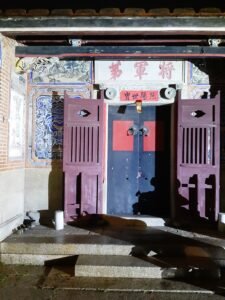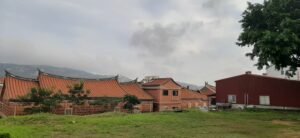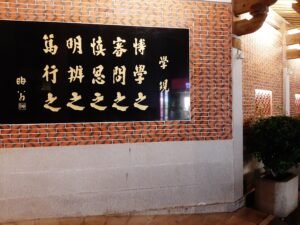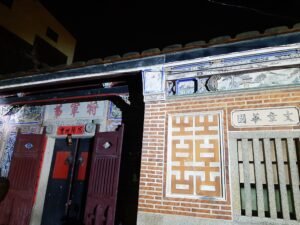
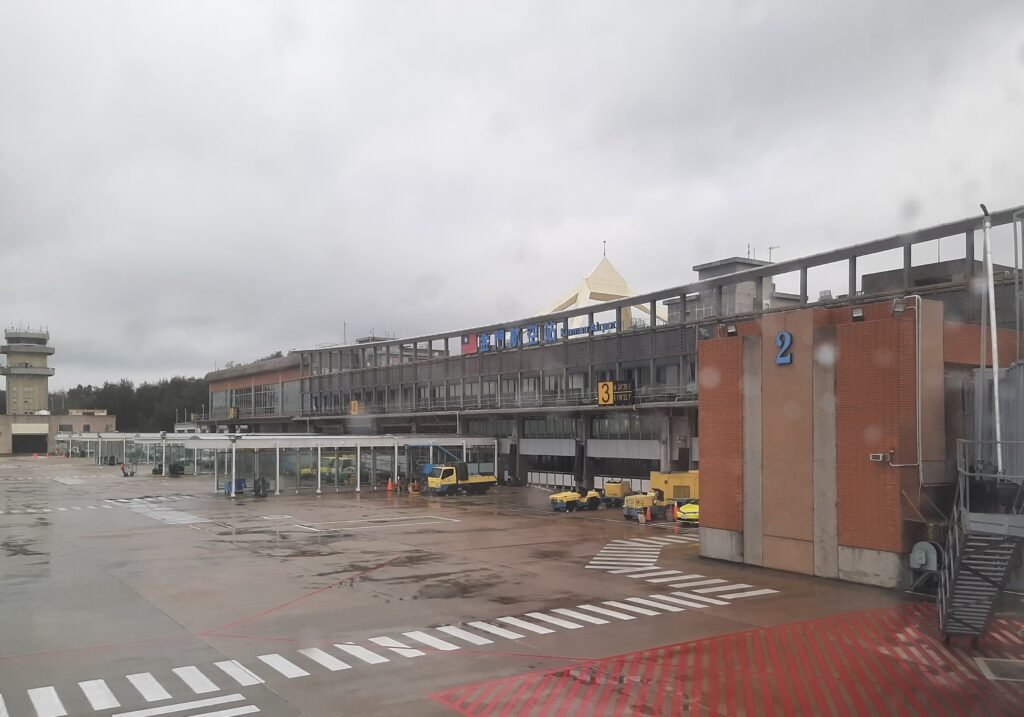
For me, that place was Kinmen, a small island just off Taiwan’s coast. Visiting Kinmen is about stepping out of my comfort zones and seeing the world with fresh eyes. Before I ever went there, I had so many preconceived notions. I thought I already “knew” what Kinmen was about — its history, its geography, even its people. I imagined an island frozen in time, defined solely by its military past. I imagined the streets to be empty, the food limited, and the locals cautious or distant. These assumptions were like invisible walls in my mind, quietly telling me that there was nothing new for me to discover there. But travel has a funny way of teaching humility. It forces you to confront your assumptions, to acknowledge that what you think you know is often just a small fraction of reality. And Kinmen, in its quiet, understated way, reminded me of that lesson every single day I was there. When you visit a new place, it’s tempting to measure it against what you know — to look for familiar patterns and label everything as “just like home” or “exactly what I expected.” But that’s exactly what keeps you from experiencing the full richness of travel. In Kinmen, I realized that letting go of expectations was the key to discovering its hidden charm. The moments that surprised me the most weren’t the famous landmarks or the guidebook spots — they were the small, ordinary things: the rhythm of local life, the way people greeted each other on the street, the little details that reveal a culture in motion.
And here’s what I want to encourage you to take away: don’t let assumptions limit your adventures. It’s so easy to think, “I’ve heard about this place, I know what it’s like, so there’s no need to go.” But assumptions are often stereotypes in disguise. They are stories we tell ourselves about people, places, and cultures — stories that feel safe because they fit our worldview. And while they’re comfortable, they’re rarely accurate. When you step into a place with an open mind, with curiosity rather than judgment, you unlock a new layer of learning. You see beyond the tourist brochure, beyond the headlines, beyond what everyone else thinks. You start to notice the rhythms of daily life that textbooks and social media can never fully capture. You notice how culture, history, and geography intertwine in ways that challenge your previous ideas. And suddenly, what you thought you “knew” becomes a starting point for exploration rather than a conclusion. I remember one particular moment in Kinmen that hit me hard. I was walking through a quiet village, watching local families going about their day. At first glance, it looked like any other small town — ordinary shops, kids playing, people tending gardens. But when I paused and observed closely, I began to notice the layers: the way traditions were quietly honored and the pride in local craftsmanship. Every little detail contradicted the assumption I had carried — that this island was defined only by its past, by military history, by stories I’d been told. And it made me realize how much we miss when we travel with preconceptions.
This is why I believe travel is one of the most powerful way for personal growth. It doesn’t just broaden your map of the world — it broadens your mind. It teaches empathy, patience, and curiosity. It reminds you that people and places cannot be reduced to a single narrative. Every destination has multiple truths, some visible only if you are willing to step beyond your comfort zone and your mental checklist of what you “expect.” Here’s a thought I want to leave with you: the next time you hear about a place and think you already know what it’s like, challenge yourself. Say, “I will go there and see for myself.” That mindset doesn’t just apply to travel — it applies to people, ideas, and even to your own assumptions about what you can achieve. Because life, like travel, is full of surprises waiting to teach you something new. When I returned from Kinmen, I noticed a change in myself. I felt more aware, more open, and more willing to question assumptions in other areas of my life. I also felt a spark of courage — the courage to explore places I had previously dismissed, the courage to meet people whose lives seemed very different from my own, the courage to embrace uncertainty as part of the adventure.
And that’s exactly the mindset I want to encourage in every listener or reader today. Don’t travel to confirm what you already think you know. Travel to challenge yourself. Travel to see what you haven’t imagined. Travel to encounter surprises that disrupt your assumptions and expand your perspective. Because when you do, you don’t just discover a place — you discover a new way of seeing the world, and a new way of seeing yourself. To me, Kinmen wasn’t just an island of history, culture, and charm — it was a mirror reflecting my own assumptions back at me. It reminded me that every place has a story, and that story can only be fully understood if you approach it with humility, curiosity, and openness. So, wherever you’re thinking of traveling next, remember this: assume nothing, observe everything, and let the experience teach you. You might arrive expecting one thing, but you’ll leave with something far richer — a lesson about the world, about people, and about your own capacity to see beyond what you think you know.
Kinmen was my lesson in humility, curiosity, and wonder. And I hope that hearing my story inspires you to take the next trip that challenges your assumptions, even if it seems small, ordinary, or “already known.” Because often, the places that seem least remarkable on paper are the ones that will teach you the most. Travel has a way of changing us, but only if we allow it to. Let your next trip be more than a checklist of sights. Let it be a journey of discovery — one that reshapes how you see the world and reminds you of the endless surprises that await when you step outside the familiar. Latest EpisodeIn this week’s episode,C#54 你以為金門只有軍事?我在金門發現的生活日常與驚喜 (Nǐ yǐwéi Jīnmén zhǐ yǒu jūnshì? Wǒ zài Jīnmén fāxiàn de shēnghuó rìcháng yǔ jīngxǐ.) I take you on a journey to Kinmen, an island I had long misunderstood. Before my trip, I imagined Kinmen as a frontline military zone, full of bomb shelters, barracks, and a few lonely soldiers. But after spending three days there, I discovered a completely different side — hidden old streets, smooth roads, vibrant local life, unique foods, and strong, independent elders. I was surprised by the blend of Chinese and Western architecture, the local dialect, and the richness of temple culture. Through my observations, I realized that travel is more than sightseeing; it’s about challenging assumptions and embracing new perspectives. In this episode, I share seven of the biggest surprises I encountered, stories from the locals, and the lessons I learned that will inspire you to see Kinmen — and other places — in a new light. Listen to the latest Podcast Phrase of the Week事半功倍 (shì bàn gōng bèi)Meaning: Half the effort, double the result Sample Sentences: 1. 提前查好金門景點和地圖,行程就能事半功倍。
2. 學會基本的閩南語問候語,溝通時會事半功倍。
3. 參加導覽團可以快速了解金門歷史,真是事半功倍。
4. 事先做好功課,拍照和找美食時就能事半功倍。
|