
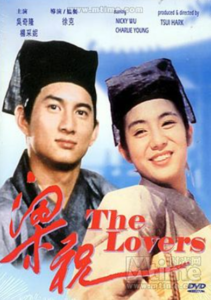
English Edition | C#57 梁山伯與祝英台:東方的經典浪漫傳說Everyone has probably heard of Romeo and Juliet. But in China, there’s also a couple often called the “Eastern Romeo and Juliet,” and their story actually predates Shakespeare’s tragedy by several hundred years. This story isn’t just about a love that transcends death—it also shows how difficult it was for girls in the past to get an education. Today, I want to share the story of Liang Shanbo and Zhu Yingtai. Long, long ago in China, there was a girl named Zhu Yingtai. She loved studying, but in that male-dominated era, girls basically couldn’t go to school—they were expected to stay home and prepare to marry. Yet Zhu Yingtai dreamed of learning, just like her brothers. She begged her parents to let her study, and eventually, they agreed. So, Zhu Yingtai disguised herself as a boy and secretly went to school. At school, she met a very diligent classmate named Liang Shanbo. They quickly became inseparable, studying together and discussing homework every day. Liang Shanbo thought Zhu Yingtai was his closest “brother,” never realizing she was a girl. Meanwhile, Zhu Yingtai quietly fell in love with his integrity and kindness. Happy times passed quickly—three years flew by. Zhu Yingtai had to return home, and Liang Shanbo had to prepare for important exams. Before they parted, Liang Shanbo finally discovered Zhu Yingtai’s secret, and they both promised: neither would marry anyone else. Later, Liang Shanbo did well on his exams and became an official. Excited, he rushed to Zhu Yingtai’s home to propose. But fate had other plans: her father had already arranged for her to marry a wealthy young man named Ma Wencai. Liang Shanbo realized they had no chance to be together. They met one last time at her home, crying inconsolably, knowing they couldn’t spend their lives together. Liang Shanbo went home heartbroken and died. When Zhu Yingtai heard the news, her heart shattered, and she decided to follow him in death. On the day of her arranged marriage, she insisted the bridal sedan pass by Liang Shanbo’s grave to pay respects. As she knelt and cried, lightning struck, and the grave suddenly opened! Without hesitation, Zhu Yingtai jumped in. Moments later, the grave closed, and a pair of beautiful butterflies emerged, flying freely among the flowers. As for how Liang Shanbo discovered the truth, some versions say he never realized she was a girl until she told him she had a “sister who looked just like her” and suggested marrying that sister instead. After more than a thousand years, each generation added its own perspective to the story, which is why there are slight differences in the plot. But no matter how the details change, the devotion Zhu Yingtai showed to love still moves me deeply. Even though I heard this story countless times as a child, sharing it today brings back the same unforgettable emotions. This is the enduring tale of Liang Shanbo and Zhu Yingtai. Although the ending is sad, people prefer to believe they ultimately found eternal freedom, transforming into butterflies and flying together. But have you ever thought: If Liang Shanbo hadn’t died and they married successfully, would the story still be as moving? Did Zhu Yingtai truly sacrifice herself for love, or might there have been other reasons? In the next episode, I want to take a different perspective and boldly discuss the “regret” behind this legend—and why this tragedy might actually have been the best way to preserve their love. See you in the next episode! Phrase of the Week形影不離 (Xíng yǐng bù lí) Meaning: Inseparable; like shadow and form. Describes two people who are always together and share a deep bond, just like Liang Shanbo and Zhu Yingtai during their school years. Sample Sentences: 1. 他們從小一起長大,形影不離。
2. 夫妻倆總是形影不離。
3. 這對好朋友在學校形影不離,誰也離不開誰。
4. 他們形影不離的友情讓同學們都很羨慕。
Explore More with Yasmime
 |