English Edition | C#70 單純只是個壞蛋嗎?從現代台灣,看這場婚姻悲劇|《秦香蓮與陳世美》Let’s start with a quick recap of the story we explored in the last episode. Qin Xianglian devoted everything to supporting her husband, Chen Shimei, so he could succeed in the imperial exams. She carried the entire family on her shoulders—working tirelessly, raising their children, and caring for his parents—while holding on to hope. But when Chen Shimei finally rose to success, becoming the top scholar and later the emperor’s son-in-law, he chose a different path. He hid his past. He abandoned his family. And even tried to have them killed. In the end, after a fierce struggle between power and law, justice was served. But… Is It Really That Simple?In Taiwan, the name “Chen Shimei” has practically become shorthand for a terrible man—a “jerk,” a “heartless betrayer.” We’ve all heard this story before: a poor scholar rises to wealth and status, then turns his back on the family who supported him. But looking at it now, I find myself asking a different question: Was this tragedy really caused by just one “bad” person? When Stories Simplify PeopleIn many traditional stories, characters are clear-cut.
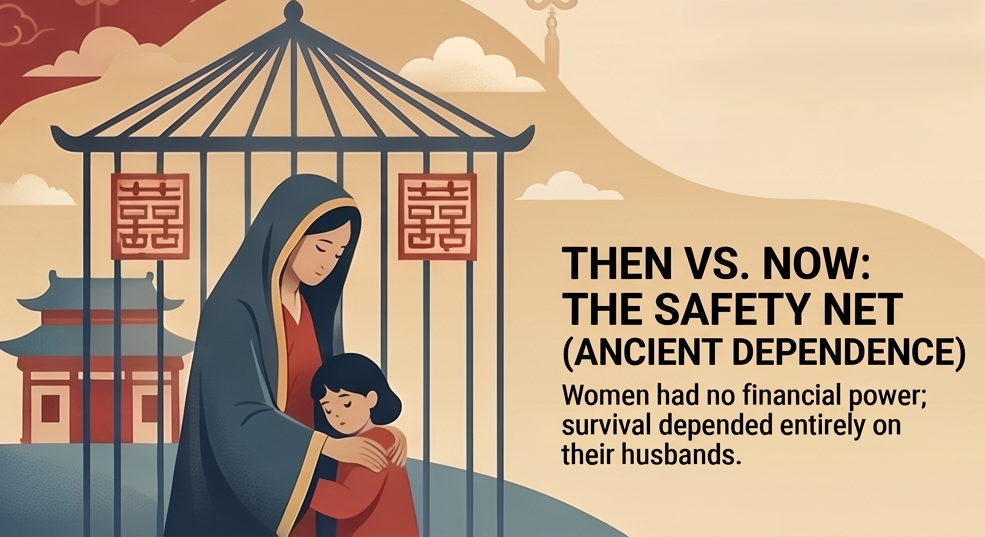
It makes the story satisfying. Easy to follow. Easy to judge. But what if we place ourselves into that world? The System Behind the ChoiceChen Shimei didn’t just “get lucky.” He went from being a poor student to the top scholar in the country—a life-changing leap in social status. Then came the emperor’s command: marry the princess. In that time, refusing the emperor wasn’t really an option—it could cost your entire family their lives. On top of that, the system allowed multiple wives. So from his perspective, becoming the emperor’s son-in-law might have felt… justified. Even inevitable. And that leads to an uncomfortable realization: Sometimes, our choices are shaped by the systems we live in. But Let’s Be ClearThis is not about defending Chen Shimei. He lied. He denied his own wife and children. He even tried to have them killed. No matter the era, those are serious wrongs—and they come with consequences. But if we zoom out, we start to see something bigger than just one man’s failure. The Reality for Women Back ThenQin Xianglian’s tragedy wasn’t only about her husband. It was also about the system she lived in. At that time, women had almost no independence. No financial power. No legal protection. Their survival depended entirely on their husbands. If a husband abandoned you, you lost everything. What About Modern Taiwan?Now let’s fast-forward to today. In Taiwan, women have access to education, careers, and legal protection. Marriage is no longer a woman’s only safety net—it’s meant to be a partnership. If a relationship falls apart, there are legal systems in place to handle property, custody, and rights. You don’t have to stand in the street crying for justice, hoping a rare “honest judge” will appear. That’s why we can say: Qin Xianglian’s tragedy came half from a bad man… and half from an unfair system. Power, Pressure, and Human NatureThere’s another layer worth thinking about. After becoming the emperor’s son-in-law, Chen Shimei was backed by powerful figures—the princess and the empress dowager. And honestly? This still happens today. The higher someone climbs, the more they have to lose. Admitting a mistake could mean losing everything—status, reputation, power. So instead of correcting a small wrong, people sometimes cover it up… and end up committing something far worse. A Story That Still Speaks to UsSo now, when I look at this story, I don’t just see a tale of karma or punishment. I see a reflection on:
Yes, we can call Chen Shimei a terrible person. But maybe the more important question is: If we were in his position—facing the same pressure and temptation—would we truly do better? And beyond that: Are there still invisible systems today that quietly push people into unfair situations? Final ThoughtMaybe Chen Shimei didn’t start out wanting to be a villain. But this story reminds us of something important: We always have a choice—to be more aware, and to take responsibility for our actions. The characters may belong to the past, but the struggles of human nature? They’re still very close to us. I hope today’s story gives you a little more awareness and a little more courage, the next time you face a difficult choice. Phrase of the Week身不由己 (shēn bù yóu jǐ) Meaning: To be unable to control one’s own actions; to be forced by circumstances Sample Sentences:
|