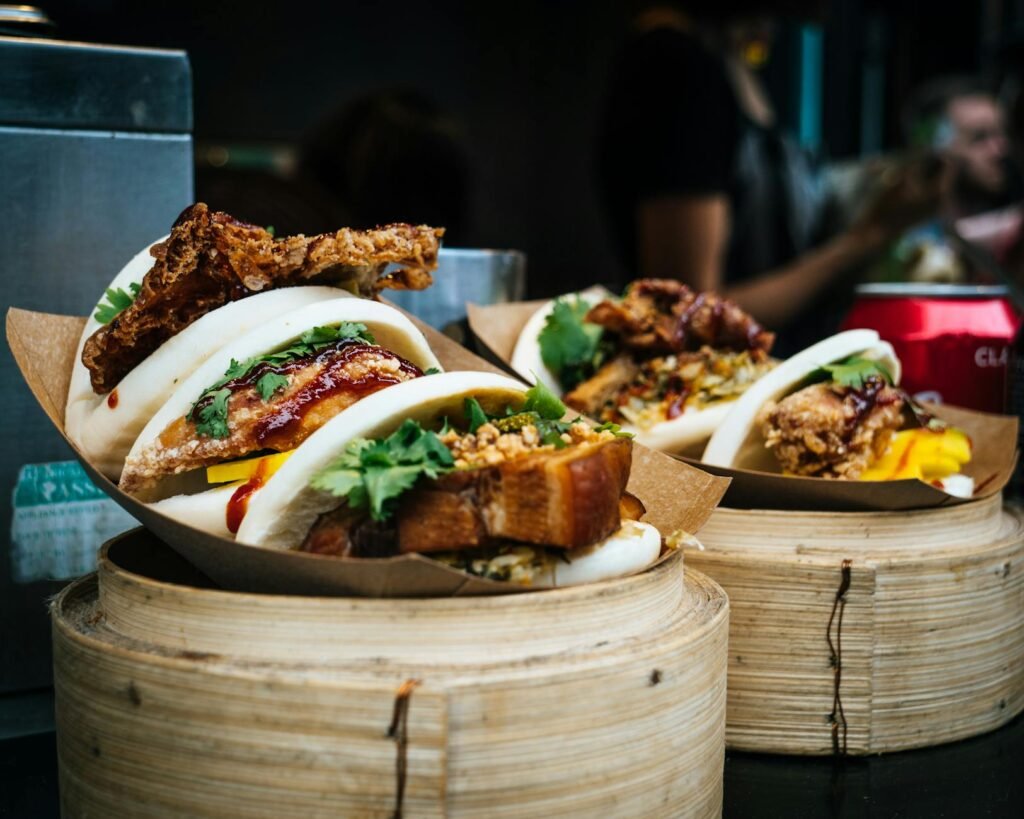
The first time I ate gua bao at a year-end company party, I didn’t know I was “biting into good fortune.” I just knew it tasted like celebration. It was one of those end-of-year gatherings where the air feels lighter than usual. People laugh a little louder, plates fill up a little more generously, and everyone carries a quiet hope that next year will be better than the last. Someone handed me a gua bao—warm, soft, and full—and I remember thinking, This feels comforting. At the time, I wasn’t thinking about symbolism or wordplay. I wasn’t thinking about “tiger bites pig” or prosperity. I was simply enjoying the moment, the food, and the feeling of being included in something collective. Only later did I realize how much meaning had been folded into that bun. Growing up, gua bao wasn’t a “symbolic food” in my mind. It wasn’t something that came with explanations or cultural footnotes. It was practical. It was filling. It was comforting. In my family, food wasn’t about presentation—it was about whether it could satisfy our stomachs and give us enough energy to get through the day. Sometimes we had proper gua bao buns—the flat, white, soft ones designed to fold neatly around the fillings. But sometimes, we didn’t. And when we didn’t, we used what we had. A regular steamed bun worked just fine. We’d split it open, stuff in the braised pork, add pickled vegetables, sprinkle peanuts and sugar if we had them, and that was it. No one complained. No one felt it was “wrong.”And honestly? It tasted good. It filled us up. It did its job. Looking back now, that detail matters to me. Because it reminds me that for a long time, gua bao in my life wasn’t about luck or fortune—it was about nourishment. About making do. About being full enough to feel okay. As a child, you don’t analyze food. You respond to it physically. Does it make you feel safe? Does it make you feel full? Does it taste familiar? Gua bao did all of that for me. The softness of the bun, whether flat or round, felt gentle. The pork was rich and comforting. The pickled mustard greens cut through the heaviness just enough to keep things balanced. It wasn’t fancy, but it was deeply satisfying. At that age, eating wasn’t symbolic. It was survival. It wasn’t until much later—well into adulthood—that I began to hear people explain gua bao in fancy terms. “Tiger bites pig.” “Biting into good fortune.” “A wallet full of money.” At first, I found it amusing. Then I found it fascinating. And eventually, I found it deeply moving. Because suddenly, this food I had eaten without thinking carried layers of meaning I had never been taught explicitly—but had somehow absorbed anyway. Taiwanese culture has a way of embedding hope into everyday life. We don’t always say big, dramatic things about the future. Instead, we eat them. We pronounce them. We fold them into daily routines. Gua bao is one of those quiet carriers of optimism. The word “hoo” sounding like “fortune.” The image of a mouth clamping down, not letting go. The idea that luck isn’t something you wait for—it’s something you bite into and hold. When I think back to that year-end company party, the symbolism suddenly feels obvious. Of course they served gua bao. It wasn’t just food—it was a shared wish. A way of saying, “We worked hard this year. May next year be abundant. May we all hold onto what we’ve earned.” At that point in my life, work meant more than just a job. It represented stability, responsibility, and the hope of moving forward. Eating gua bao in that setting felt different from eating it as a child. Back then, it filled my stomach. Now, it filled something else too—a sense of continuity between effort and reward. What hasn’t changed, though, is the taste. That first bite still delivers the same satisfaction. The bun—soft, chewy, with that QQ texture Taiwanese people love—gives slightly under your teeth. The pork is tender and rich, slow-braised until it almost melts. The pickled mustard greens bring crunch and acidity, preventing the whole thing from becoming too heavy. The peanut powder and sugar add a gentle sweetness that lingers. And when cilantro is added, everything lifts. It’s a combination that feels complete. Not overwhelming. Not excessive. Just right. And maybe that’s why gua bao has stayed with me for so long. It doesn’t try too hard. It doesn’t demand attention. Whether you’re eating it from a street stall, a breakfast shop, a company party, or a high-end restaurant with upgraded ingredients, it still feels grounded. Approachable. Honest. Even now, when I see modern versions with premium pork or creative sauces, I don’t feel that the original has been replaced. Because the heart of gua bao isn’t in the ingredients—it’s in the balance. In the idea that something simple can still be deeply satisfying. I also think about accessibility. Gua bao isn’t reserved for special occasions, even though it shows up at them. It’s something anyone can eat. Something that doesn’t exclude. That matters to me. Because my earliest memories of it aren’t about abundance. We didn’t need the “perfect” bun to enjoy it. A steamed bun worked. The satisfaction came from the warmth, the fullness, and the care behind the food. That lesson has stayed with me longer than I realized. Today, when people ask me about gua bao, I don’t rush to explain the symbolism right away. I talk about how it feels. How it fills you up. How it brings together salty, sweet, sour, and fragrant flavors in a way that feels familiar even if it’s your first time. And then, if they’re interested, I tell them about the luck. About the tiger. About the way Taiwanese people like to sneak hope into everyday things. Because that’s what gua bao represents to me now—a bridge between survival and symbolism, between childhood and adulthood, between simply eating and truly understanding. Every time I eat one, I’m reminded of where I came from and where I’m going. Of meals that were about filling an empty stomach, and meals that are about celebrating effort, time, and shared wishes. I’m reminded that sometimes, good fortune doesn’t arrive dramatically. Sometimes, it shows up warm, soft, and quietly satisfying—wrapped in a bun, ready to be held with both hands. So yes, now I know that gua bao means “biting into good fortune.” But even if I didn’t know that, I think I would still feel it. Latest EpisodeIn this week’s episode,C#52 台灣的割包:漢堡的台式版本,包進祝福的美味傳統 (Táiwān de gē bāo: hànbǎo de táishì bǎnběn, bā jìn zhùfú de měiwèi chuántǒng), I want to introduce a Taiwanese food that foreigners often call the “Taiwanese hamburger,” but to us, it means so much more—gua bao. I’ll take you beyond how it tastes and into what it represents: language, symbolism, and the idea of biting onto good fortune. From its soft, QQ bun to the playful phrase “tiger bites pig,” this episode is about how a simple street food carries culture, hope, and blessings—one unforgettable bite at a time. Listen to the latest Podcast Phrase of the Week香氣四溢 (xiāng qì sì yì)Meaning: Aromas overflowing; smells wonderfully fragrant Sample Sentences: 1. 刈包香氣四溢。
2. 媽媽蒸的包子香氣四溢。
3. 這家刈包攤的香氣四溢,後面很多人排隊等著買刈包。
4. 廚房裡香氣四溢,我的肚子也跟著咕嚕叫。
|