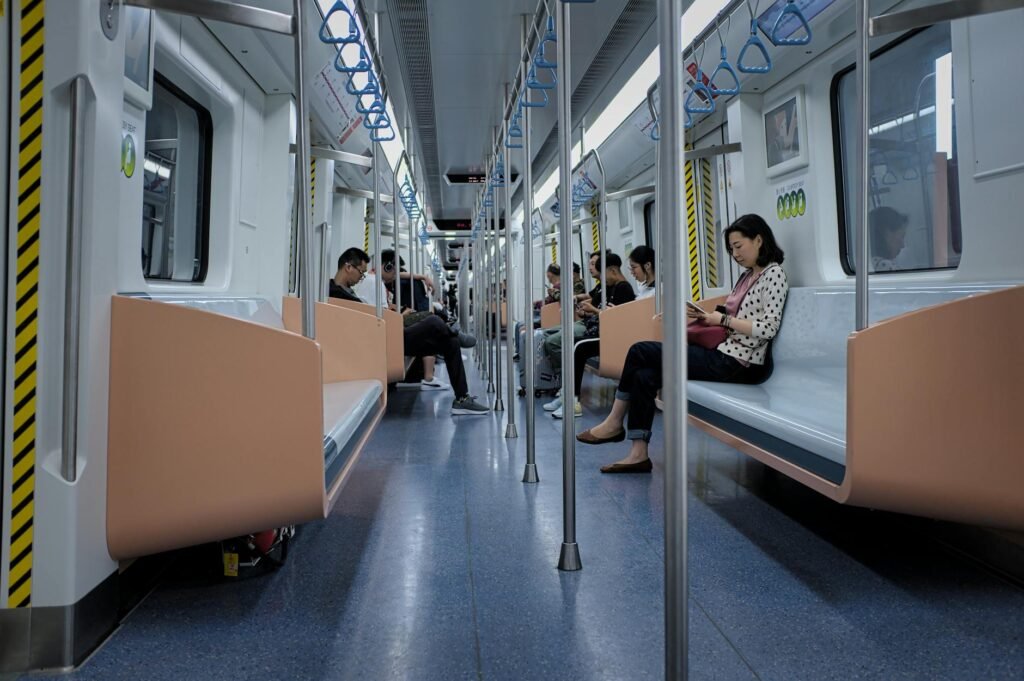
The first time I took the MRT in Taiwan a couple of years ago, nothing dramatic happened—and that was exactly what shocked me. No one was shouting. No one was rushing aggressively. No one was eating, drinking, or talking loudly on their phone. The train arrived smoothly, people lined up neatly, and passengers stepped off before anyone tried to board. I remember standing there, backpack on my shoulders, suddenly aware that I was the most clumsy presence in the carriage—without having done anything “wrong.” At that moment, I realized something important: the MRT in Taiwan is not just a transportation system. It is a moving reflection of Taiwan’s urban culture. The “No Eating or Drinking” Rule Is Not Really About FoodMost foreigners first notice the “No eating or drinking” signs—and the fines. On the surface, this rule seems strict, even excessive. After all, what harm could a sip of water do? But after living here longer, I’ve come to believe this rule isn’t about food at all. It’s about shared responsibility. In Taiwan, public space is treated as something everyone co-owns. Cleanliness is not outsourced only to cleaners or enforced only by punishment; it’s maintained through mutual restraint. By choosing not to eat or drink, each person contributes a tiny act of discipline so that the space remains pleasant for everyone else. What struck me most is not the rule itself, but how rarely it needs to be enforced. People comply even when no one is watching. That tells me the behavior has already been internalized. The rule has become a value. Quiet Is Not Awkward—It’s ConsiderateAnother thing foreigners often notice is how quiet the MRT is. Conversations are soft. Phone calls are rare. Even groups of friends seem to instinctively lower their voices once they step onto the train. In many cultures, silence feels awkward or unfriendly. In Taiwan, silence feels respectful. Quietness on the MRT is not about suppressing expression; it’s about emotional self-awareness. People recognize that public transport is a shared, temporary space. Your emotions, your stories, your frustrations don’t need to spill into someone else’s commute. This kind of restraint isn’t cold. It’s considerate. Over time, I realized that this habit reflects a deeper cultural skill: the ability to regulate oneself for the comfort of the group. It’s a quiet form of empathy—one that doesn’t require words. Queuing and Flow: Cooperation Without ConversationOne of my favorite MRT moments happens before the train even arrives. People line up on both sides of the platform doors, leaving a clear space in the middle. When the doors open, everyone waits. Passengers exit first. Only then does boarding begin. No announcements are needed. No staff are yelling instructions. Everyone just knows what to do. This level of coordination among strangers fascinates me. It’s cooperation without communication, order without authority. The system works because individuals voluntarily align their behavior with the group’s rhythm. Even escalators follow this logic: stand on the right, walk on the left. It’s not enforced aggressively, yet most people follow it. And when someone doesn’t know the rule, others adjust patiently. To me, this reflects a cultural preference for smoothness over speed—reducing friction instead of winning space. Priority Seats and Moral AwarenessPriority seats on the MRT taught me something I didn’t expect. In many places, these seats function as legal labels: you are allowed or not allowed to sit here. In Taiwan, they feel more like a moral reminder. I’ve seen young people stand up instantly when an elderly person enters the carriage—sometimes before the person even asks. I’ve also seen people avoid sitting in priority seats altogether, even when the train is empty, just to stay ready. What matters isn’t the sign—it’s the awareness. The expectation seems to be: observe, assess, and act appropriately. This requires emotional intelligence. You’re not just following rules; you’re reading people. That skill—being attentive to others without being intrusive—is deeply embedded in Taiwanese social life, and the MRT quietly trains everyone in it. Why Foreigners Struggle at FirstWhen foreigners make mistakes on the MRT, it’s rarely due to disrespect. It’s usually a clash of habits. Many of us come from cultures that prioritize individual comfort: drinking water when we’re thirsty, talking freely, occupying space without thinking twice. These behaviors are normal elsewhere. But Taiwan’s MRT operates on a different assumption: your personal comfort should not reduce collective comfort. Once foreigners understand this, the rules stop feeling restrictive and start making sense. The MRT doesn’t demand perfection—it invites awareness. What the MRT Taught Me About TaiwanThe longer I observe MRT etiquette, the more I see it as a compressed lesson in Taiwanese values.
No one lectures you. No one shames you publicly. The system trusts that people will adjust once they understand. And when mistakes happen, they’re often met with quiet tolerance rather than confrontation. That, to me, is one of Taiwan’s most underrated strengths. The MRT as a Moving ClassroomIf you really want to understand Taiwan, you can start with the MRT. Watch how people stand, wait, move, and give space. Notice how much communication happens without words. Pay attention to how rules are followed not out of fear, but out of consideration. For foreigners, learning MRT etiquette is not about blending in perfectly. It’s about learning a different way of sharing space—one that values calm, awareness, and mutual respect. And once you get it, you may find yourself carrying these habits beyond the train—into daily life. That’s when you realize: the MRT doesn’t just take you places. It quietly teaches you how Taiwan works. Phrase of the Week將心比心
|