The Pride of a Dragon-Year Child
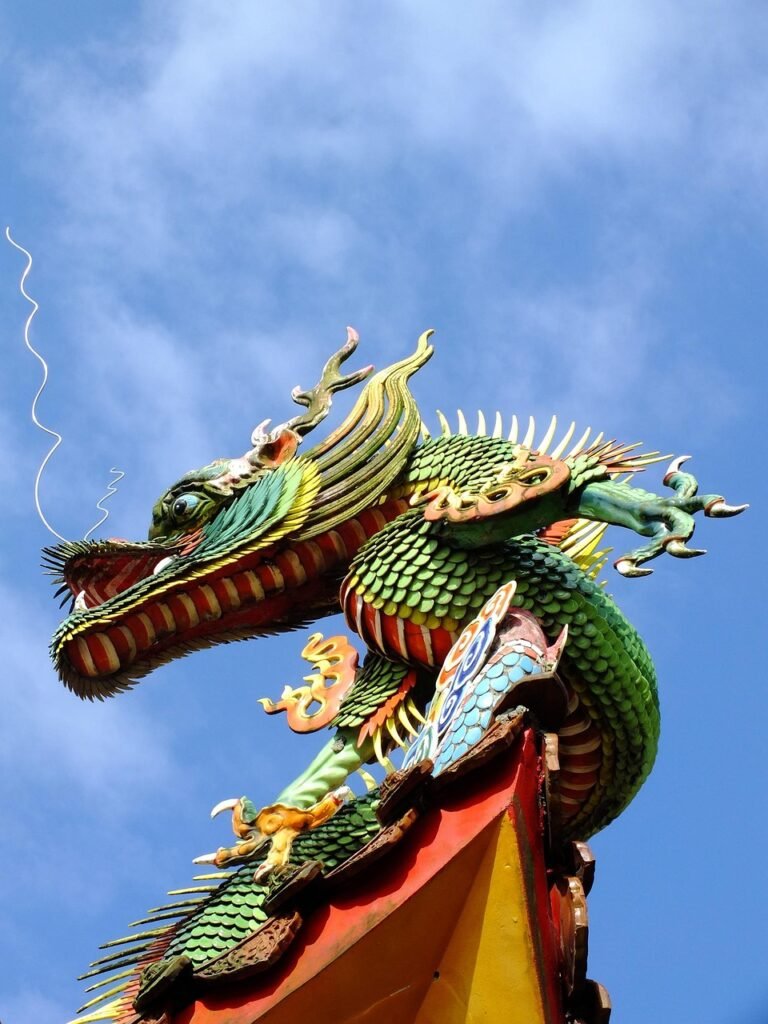
In our family, my eldest sister has always held a special place. She is the firstborn, yes — but she is also a Dragon-year baby. In Chinese culture, that combination carries a certain weight. To be born in the Year of the Dragon is to be marked from the very start with the expectations of greatness. The Dragon, after all, is the only mythical creature in the Chinese zodiac, a symbol of power, ambition, and success.
My grandmother once told me that when my sister was born, our relatives showered my parents with congratulations — not only were they welcoming their first child, but she was also a Dragon-year baby.
I was too young at the time to understand the cultural significance, but looking back now, I can see the way it colored my parents’ pride. My father would beam when people asked about her age and zodiac sign. My mother would dress her in bright red or embroidered dresses during the Lunar New Year, as if to make the Dragon shine more brightly.
It’s hard to say whether my sister truly received special treatment at home because of this. Perhaps part of it came from her being the firstborn — the one who turned my parents into parents. But I also think, deep down, the Dragon aura played a role. There’s a subtle but persistent belief that Dragon-born children are destined for something bigger, and it made her childhood feel slightly elevated, at least in the eyes of the family.
The Crowded First Grade
There are always a lot of children born in a Year of the Dragon. It’s a baby boom that happens every twelve years, as many parents plan for a Dragon-year baby, hoping their child will carry the luck and strength of the zodiac’s most powerful sign. But this also means that when those Dragon-year kids reach school age, the competition for a spot in a good elementary school becomes fierce.
When my sister turned six and it was time for her to start first grade, the neighborhood elementary schools were already filled to the brim. The number of seats was limited, and the flood of Dragon-year children made it impossible for every family to secure a spot nearby.
The school district had only one way to handle the situation — a lottery. Every child had an equal chance: names would be drawn at random to decide who could attend the neighborhood school, and who would have to travel to a farther one.
My mom told me about the tension in our home that year. They prepared all the paperwork carefully, submitted everything on time, and then waited. The draw would decide whether my sister could study just a short walk from home or face long, tiring commutes every day. When the results finally came and her name was on the accepted list, they were relieved beyond words. They knew how different her daily life would have been if luck hadn’t been on her side — earlier mornings, less rest, and more hours spent on the road instead of playing after school.
Looking back, I can see how stressful that lottery must have been for my parents. And all of it happened simply because my sister was born in a year when thousands of other parents shared the same dream — to have a Dragon-year baby.
The Pressure of the High School Entrance Exam
If the battle for elementary school was intense, the fight for high school was even fiercer. In our education system, the high school entrance exam is a defining moment. It’s a single test that determines whether a student gets into a regular, reputable high school or a lower-ranked one. The competition is always stiff, but for Dragon-year kids, it becomes almost brutal.
Because of the Dragon-year baby boom, there were simply more students competing for the same number of seats. The math was simple but cruel: more people chasing the same goal meant that even talented students had to work twice as hard to secure a spot.
My sister was no exception. She was bright, but she didn’t enjoy the constant grind of test preparation. The months leading up to the exam were filled with late-night study sessions, extra tutoring classes, and mountains of practice papers. I can still remember her slouched at her desk, pencil in hand, eyes glazed over from hours of memorization.
She once told me, half-joking but half-serious, “It feels like I have to run twice as fast just to get in the same place.” I didn’t fully grasp the weight of that statement at the time, but now I see how true it was. The sheer number of Dragon-year students created an invisible pressure, squeezing every drop of energy from them in the name of competition.
When the results came, my sister did well enough to get into a regular high school — but it was a victory won at a cost. She seemed relieved, but also tired. It’s the exhaustion of having fought too long for something that should have been less of a battle.
From Jealousy to Sympathy
When I was younger, I’ll admit — I was a little jealous of my sister. She was the firstborn, the one who got all the attention when she was small. She had the Dragon-year aura, the kind of symbolic prestige I didn’t have. At family gatherings, relatives would beam at her, asking about her grades, praising her talents, and reminding her how lucky she was to be born in such an auspicious year.
But over time, my feelings began to shift. I started to notice the way her shoulders slumped when she came home from school, the way she sighed before opening her textbooks, the way she seemed to carry a weight that wasn’t entirely her own. I realized that being a Dragon-year child didn’t just mean extra pride — it also meant extra pressure.
She wasn’t just competing with her classmates; she was competing with an entire generation of children born under the same sign, all of them chasing the same limited opportunities. And because of the cultural expectations surrounding Dragons, there was also an unspoken demand that she live up to a higher standard. It wasn’t enough to just be herself — she had to be exceptional.
By the time I reached the same stages of schooling, the crowd had thinned. I didn’t have to go through lotteries for a school seat. I didn’t have to fight through a double-sized wave of peers to earn my place in high school. Suddenly, my life felt… easier.
That’s when my jealousy faded completely and was replaced by sympathy. My sister’s journey had been harder in ways I had never understood before.
What I Learned from Watching Her
Observing my sister’s experiences taught me a quiet but powerful lesson about life: timing matters. We often think our success depends solely on our effort and ability, but the truth is, the circumstances we’re born into — even something as arbitrary as the year on the calendar — can shape the challenges we face.
My sister didn’t choose to be a Dragon-year child. She didn’t choose to grow up surrounded by fierce competition or to carry the weight of cultural expectations. Yet those factors shaped her path all the same.
I learned that pride and pressure often travel together. The same Dragon sign that made relatives beam also made schools crowded. The same cultural belief that lifted her in people’s eyes also pushed her harder than many of her peers.
I also learned to appreciate my own path more. I didn’t have the symbolic prestige of being born in a Dragon year, but I also didn’t have the same uphill climb. My journey wasn’t free of obstacles, but the road was a little less crowded, and I could walk it at my own pace.
In the end, what I observed is that luck can be a double-edged sword. Being a Dragon-year child might bring certain advantages in reputation or tradition, but it can also bring challenges invisible to those looking from the outside. My sister’s story reminded me to look beyond the surface — to see not just the symbols, but the struggles behind them.
And perhaps that’s the truest kind of luck: to understand the stories behind the people we love, and to appreciate the journey they’ve walked, even when it’s very different from our own.
Latest Episode
In this week’s episode, C#38 龍只是傳說?, We explore the fascinating role of the dragon in Taiwanese culture — from ancient legends and imperial symbolism to everyday language and place names. You’ll hear the inspiring story of “The Carp Leaping Over the Dragon Gate,” 魚躍龍門 (yú yuè lóng mén) and discover how idioms like 望子成龍 (wàng zǐ chéng lóng) shape the way people express hopes and dreams, and learn why dragons remain beloved in both their traditional majestic form and their modern cartoon adaptations. Whether you see dragons as awe-inspiring creatures or cute cultural icons, you’ll walk away with a deeper appreciation for how this mythical animal continues to inspire and influence life in Taiwan today.
Phrase of the Week
望子成龍 (wàng zǐ chéng lóng)
Literally “to hope one’s son becomes a dragon,” meaning parents hope their children will become outstanding and successful.
Sample Sentences:
- 父母都希望望子成龍。
Fùmǔ dōu xīwàng wàng zǐ chéng lóng.
Parents all hope their children will be successful.
- 在亞洲文化中,望子成龍是很多父母的共同心願。
Zài Yàzhōu wénhuà zhōng, wàng zǐ chéng lóng shì hěn duō fùmǔ de gòngtóng xīnyuàn.
In Asian culture, wanting children to be successful is a common wish among parents.
- 有時候,望子成龍的壓力會讓孩子感到很累。
Yǒu shíhòu, wàng zǐ chéng lóng de yālì huì ràng háizi gǎndào hěn lèi.
Sometimes, the pressure of parents’ high expectations can make children feel very tired.